No. 427: Modern Moonshinin' in Tennessee
The Daily · · 7 min read
Nashville's Alt-Daily ⁂ Moonshine · Amazon · Hank · Federal Funds · Much More!
From Geneva DeCobert
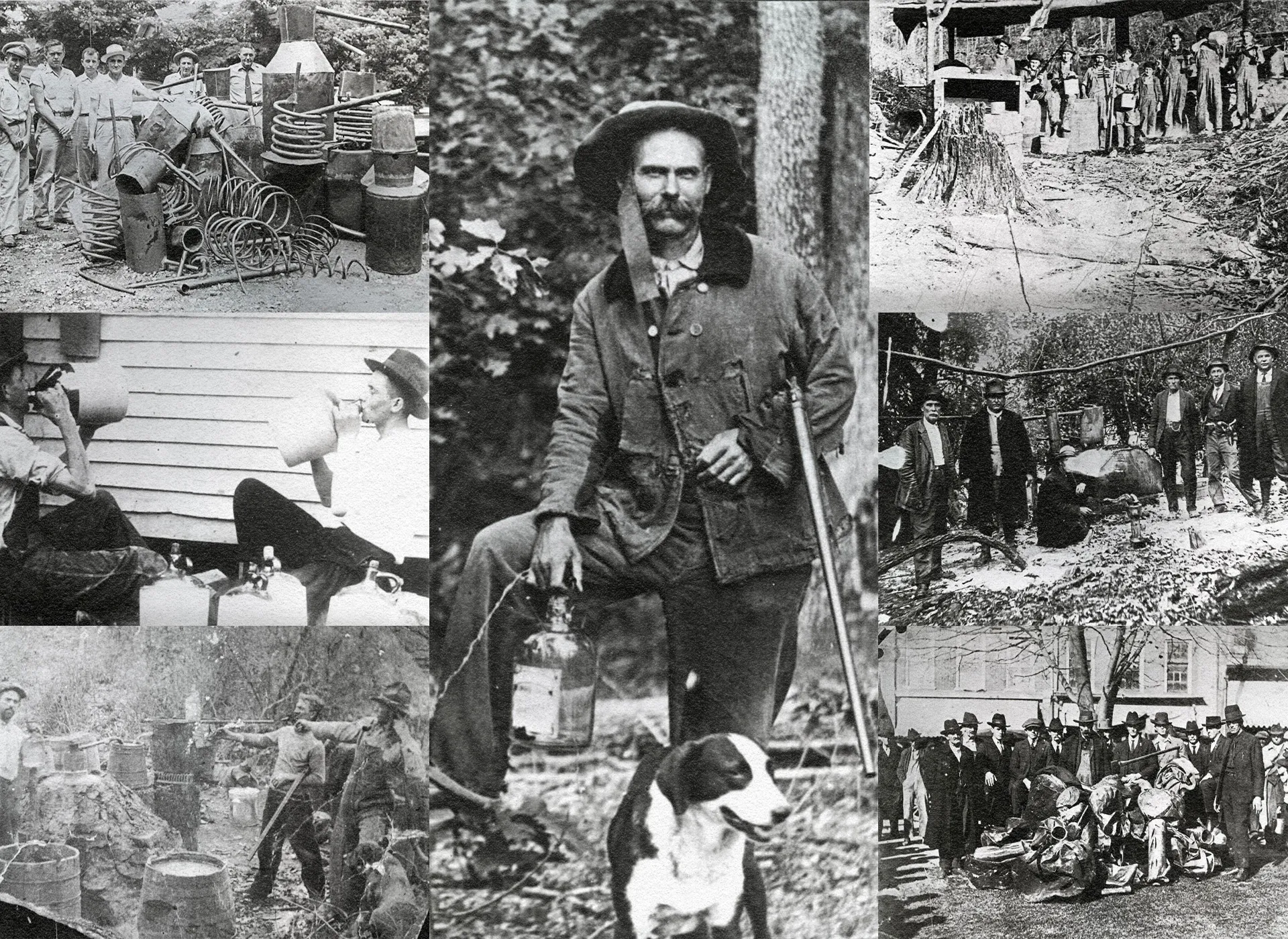
Whiskey became a natural byproduct for some of the earliest farmers in the states. Corn was a fast-growing native American crop, and early farmers soon found that they had much more than they could handle. As whiskey would take up less space, weigh less, and could be sold for a higher value as an artisan product, the market took off quickly. By 1790, Treasury Secretary Alexander Hamilton, looking for revenue for the fledgling United States of America, insisted that the federal government levy a tax on whiskey. And thus, the federal Whiskey Tax was born a year later—with big breaks for major distillers, of course.
Protests immediately followed. One day in 1791, excise officer Robert Johnson was on his collection route in Western Pennsylvania when eleven men dressed as women attacked him. Johnson was stripped, tarred, feathered, and had his horse stolen before being left in the woods. When he issued arrest warrants for the two men he recognized, the man sent with those warrants suffered the same fate—forcing Johnson to resign from his post.
Things escalated until a year later, when President Washington assembled federal troops to march on the area. They arrested all suspected rebels and took them to Philadelphia for trial, where two were charged with treason only to eventually be given presidential pardons. Protests continued—in the form of tax evasion—throughout the states until 1802 when Thomas Jefferson repealed the tax alongside the Republican party. At this point, the money had been deemed nearly impossible to collect.
Later, during the Civil War, the Confederate government outlawed all whiskey production, hoping it would aid in fielding more troops. This period was when the term “moonshining”, or the process of distilling by the light of the moon, came into fashion. After the Civil War, the ban was lifted and distilleries cropped up so fast in response that there were hundreds statewide by 1908.
Unfortunately, the boom didn’t last. Tennessee led the nation in prohibition, and distilling was banned again in 1910—ten years before the federal government instituted prohibition nationwide. “Moonshining'' remained the cultural standard until 1939, six years after the repeal of federal prohibition. At the same time, a statewide tax on transactions of distilled liquor was implemented. In part because of taxes like this, clandestine home distilling had firmly planted itself within the zeitgeist of the American South.
HOME DISTILLERS TODAY
There aren't that many differences between the home distillers of 1790 to 1939 and the home distillers of today aside from the technology. “Government officials are quite invested in heavily taxing certain substances,” notes Tore Olsson, Associate Professor of History at the University of Tennessee. “Often people, especially those in the mountains, are trying to get away from this kind of interference.” Both federal and state governments completely outlaw home distilling, but the law is nearly powerless in the face of the American tradition. The two men I spoke with have little concern for the legality of their hobby and take pride in what they create. While many enjoy sharing product and even equipment, there isn’t much to be said for trading recipes—in the true spirit of American autonomy, everyone has their own special technique.
Moonshiners often have pseudonyms specific to the skill (to maintain anonymity), and “Tom Boggins” is no different. Boggins is a true homesteader: when we spoke, he was taking a short break from milling his own wood to use in a firewood barn. A born Nashvillian, Boggins learned each new skill he utilizes every day on the farm by himself, with only a collection of books for direction. Everything he does is driven by an “it can’t be that hard” gene deep within him, and whiskey distillation is no different. “It’s not that hard,” he laughs, “And if it is, who cares? It won’t be the second time.”
⧖⧗⧖ ENJOY THE PAMPHLETEER? ⧗⧖⧗
Consider a donation. Help us grow our coverage, expand our reach, and explore a wider variety of topics.
HEADLINES
Amazon halts work on downtown Nashville office campus (Tennessean) Amazon's $230 million Operations Center of Excellence was heralded as a major boon by Tennessee leaders, destined to propel the state's tech industry to a new level while injecting 5,000 highly paid jobs into the market.
Effort underway to save home formerly owned by Hank Williams (WSMV) The property, Beechwood Hall, is facing potential demolition by its new owners, according to an organized group of people hoping to save the property. However, the Heritage Foundation of Williamson County says that’s not the case, and it is doing all it can to preserve the property with its new owners.
Tennessee board to approve $16M in incentives, including $9M for SK Food Group (Center Square) SK Food Group plans to spend $205.2 million to build a 525,000-square-foot manufacturing facility for its mobile catering business, this time in Cleveland. The company supplies sandwiches, wraps, snacks, flatbreads, burgers and other protein snacks for branding by corporate customers. The company has promised 840 new jobs by 2030.
✓You're on the list. The rest of today's issue is below.
POLITICS
Tennessee House speaker mulls rejecting US education money (AP) One of Tennessee’s most influential Republican lawmakers says the state should stop accepting the nearly $1.8 billion of federal K-12 education dollars that help provide support for low-income students, English learners and students with disabilities.
Lee earmarks $200 million to move TPAC (Axios) TPAC is located downtown in the state-owned James K. Polk building. The state is pursuing a redevelopment of that property, which triggered the nonprofit group to ponder a new location.
Tennessee private school voucher expansion bill clears first legislative hurdle (Chalkbeat) If the legislation becomes law, eligible families in the Chattanooga-based district, which has 44,000 students, could apply to receive taxpayer money to pay toward private school tuition next school year.
DEVELOPMENT
Vanderbilt breaks ground on basketball operations center
PostSummer start eyed for downtown hotel
PostLower Broadway building sells for $30M
PostHugo Boss set for The Mall at Green Hills
Post
THINGS TO DO
- View the full calendar here. Dancing in the Street: The Music of Motown with The Nashville Symphony @ Schermerhorn Symphony Center Thursday through Saturday, more info here.
- Check out our Nashville farmer's market guide and our 2023 southern festival guide and 🎥 movie guide.
- On our Spotify: Pamphleteer's Picks, a playlist of our favorite bands in town this week, On the Radar, a playlist of the best bands in town in the future, and Nashville Sounds, an ever-growing sample of the local music scene.
Tonight Thu, Feb 9
| Show | Venue | Time | Price | Link |
|---|---|---|---|---|
| ROOM 008+ music, dancing, fashion and champagne ruled by the club’s resident DJs. All are welcome but if you're not dressed to impress you don't get in. R.S.V.P. online. | The Eighth Room | 8p | Free | Info for ROOM 008 |
| Live Irish Music | McNamara’s Irish Pub | 6p | Free | Info for Live Irish Music |
| Kelly’s Heroes | Robert’s Western World | 6:30p | Free | Info for Kelly’s Heroes |
| Open Mic+ vet community here | Fox & Locke | 6:30p | Free | Info for Open Mic |
ON THE RADAR
🎸 Death Cab for Cutie @ Ryman Auditorium, 2/14, 7:30p, $59+, Info
+ an emo Valentine's Day for you and yours
🎸 Lotus @ Brooklyn Bowl, 2/16, 8p, $20, Info
🎸 STRFKR @ Brooklyn Bowl, 2/17, 8p, $25+, Info
+ psychedelic indie synth-pop & late aughts nostalgia for millennials
🎙 Weyes Blood @ Brooklyn Bowl, 2/22, 8p, $23+, Info
+ Folk-pop, a modern Joan Baez
🎻 Billy Strings @ Bridgestone, 2/24-25, 8p, Info
🎻 Billy Strings @ Ryman, 2/26, 8p, Info
+ Only eligible if you purchased a ticket to one of his previous nights' Bridgestone shows
🥁 Os Mutantes @ The Blue Room, 3/1, 7p, $25, Info
+ Brazilian psychedelic rock band, part of the Tropicália movement of the late 1960s
🎸 Dawes @ Ryman Auditorium, 3/4, 8p, $25+, Info
+ folk-rock from Los Angeles
🎻 Margo Price @ Ryman Auditorium, 3/9, $35+, Info
+ Nashville-based singer-songwriter
🕺 Lettuce @ The Brooklyn Bowl, 3/17-18, $32, Info
+ Funk
🎸 Goose @ The Ryman, 3/31-4/1, Info
+ Funky jam band.
The rest of today's issue
Keep reading: free, just your email
Headlines, tools, development and tonight's shows are one step away. Tomorrow's Daily comes with it.
Like what we do? Forward us to a friend.
Comments
Bards join the discussion. Everyone can read it.