Field Guide: The Quest for the Painted Tigersnail
Katie Lewis wanders around the state's newest state park in search of a rare creature
The gift that fall gives us is its own disrobing. The trappings drift to the ground so all that’s left are the spindly underpinnings and what they’ve been hiding: a spectacular view of Franklin County that, in one specific spot, gives hikers a gander of Alabama.
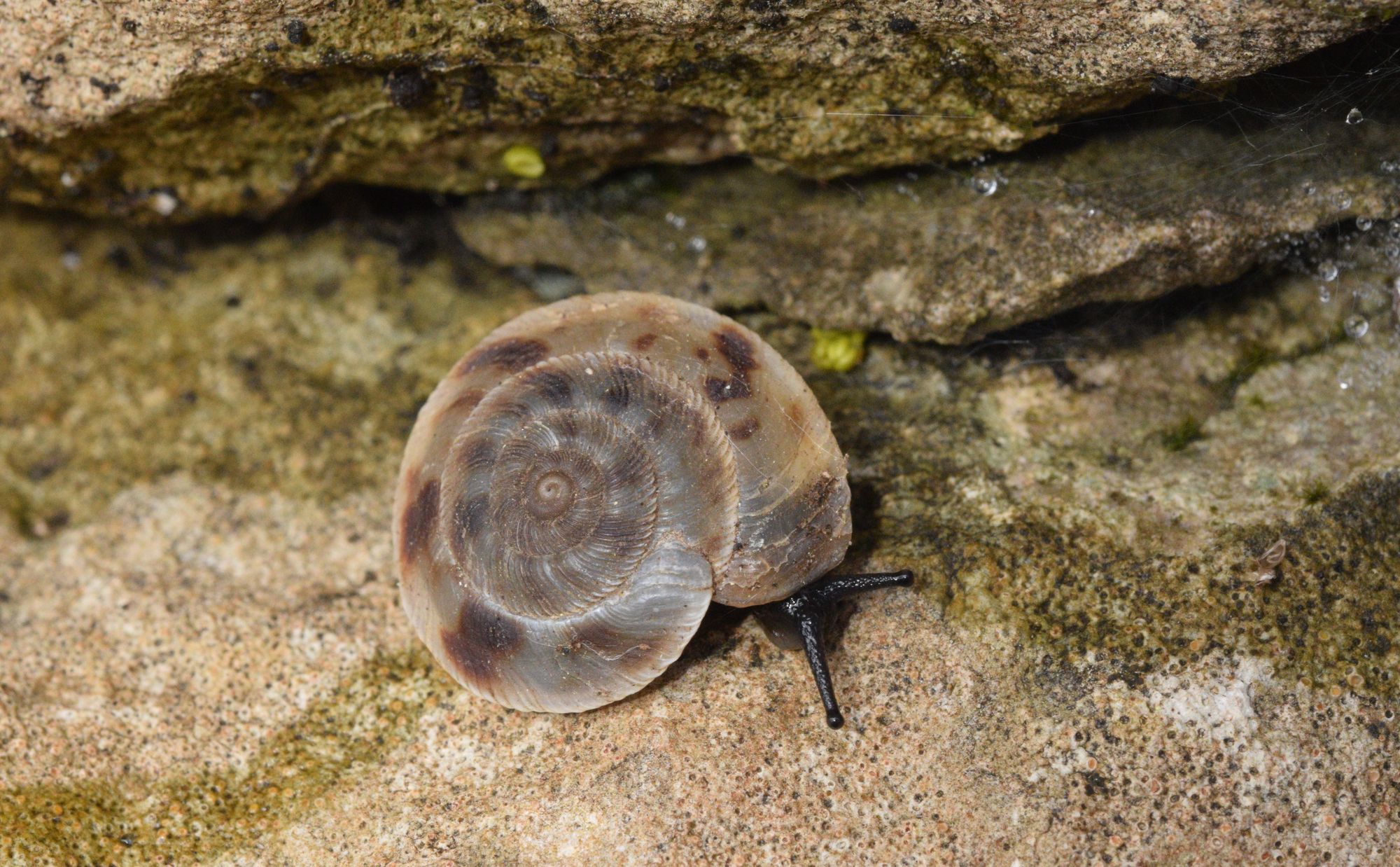
This is Tennessee’s newest state park, Head of the Crow, which opened in October. It’s 4,258 acres of leaf-littered hills, limestone caves, and, they say, the rare painted tigersnail. This gastropod lives only in a 10-mile radius, and I’m here to find one. Just one; that’s all I ask.
During a several-day monitoring survey for the U.S. Fish and Wildlife Service in April, Chattanooga-based naturalist Robert Lamb encountered over 30 land snail species, the tigersnail among them. Their Instagram photo is the one I used as a reference during my own expedition.
“Seeing the tigersnails in person for the first time was incredibly exciting, and still is on repeat visits. They are such a beautifully unique species that adds so much character to this little pocket of the state,” said Lamb. “Volunteering on these surveys and seeing so many things I never would have otherwise, in such an incredibly beautiful place, was easily one of the most impactful experiences in my life.”
Past a fragrant weekend meat-smoking, down Old CCC Road and beyond Lois Lane (yes, really) is the 2.9-mile loop I’ve chosen, the same as Lamb, from the park’s four trails. Staff at the temporary visitors center — which, one should note, is 20 minutes past this trail; my first blunder — assure me the Sherwood Day Loop isn’t strenuous. But if your eyes are trained on the ground, rooting around in partridgeberry first mistaken for purslane while snail-chasing, then trip, you shall. Repeatedly.
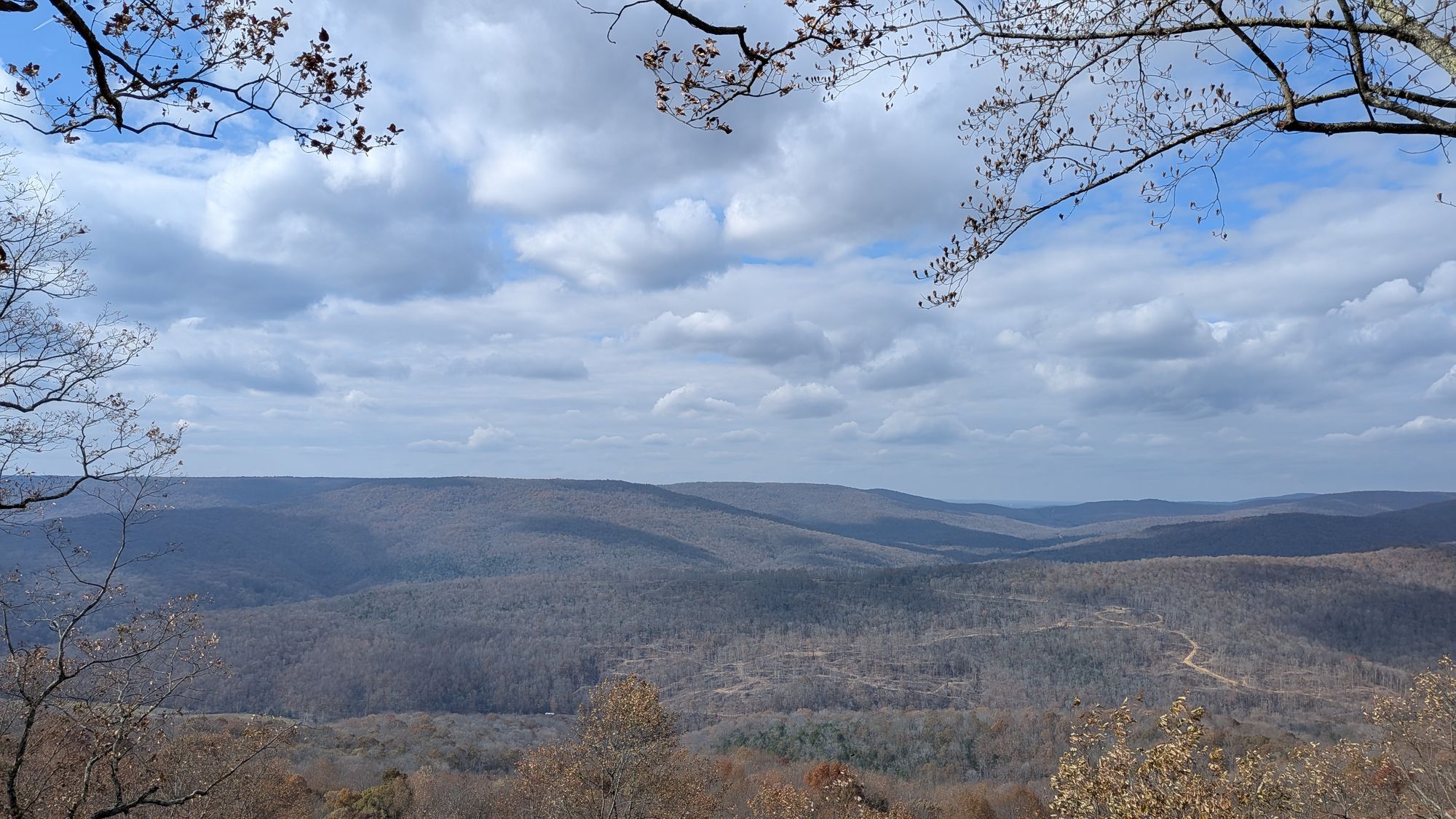
I start this admittedly skeptical Saturday hike — it hasn’t rained in Sewanee for nearly two weeks, and Lamb tells me it’s easiest to find the tigersnails in warm weather after a good rain, especially in the early morning — admiring the Crow Creek Valley overlook, not another soul in sight. I’m systematically rustling at the base of each damp tree like it’s a to-do task to check off rather than a happy discovery at which to marvel. The fact that this mollusk happens to live here and only here is a minor wonder. Why here, why Tennessee? It’s the question I’ve asked both myself and tourists for 40 years now.
“It’s pretty amazing to be able to drive past [a] seemingly insignificant piece of land and know that there’s a creature there found nowhere else on earth,” says Lamb.
A flat, hot-pink maple leaf showgirl shines face-up among crumbled brown oak leaves. My dog strains at her leash, eager to mix oranges with silvers. We mimic one another, neither of us really sure what we’re looking for but knowing there’s something to find among the colors. The greenbrier thorns snag my pants as I reach past the tight blue berry bundles toward a wet clump of leaves. As they’re knocked away with a stick, the log beneath disintegrates. This happens over and over, uncovered wood crumpling upon touch.
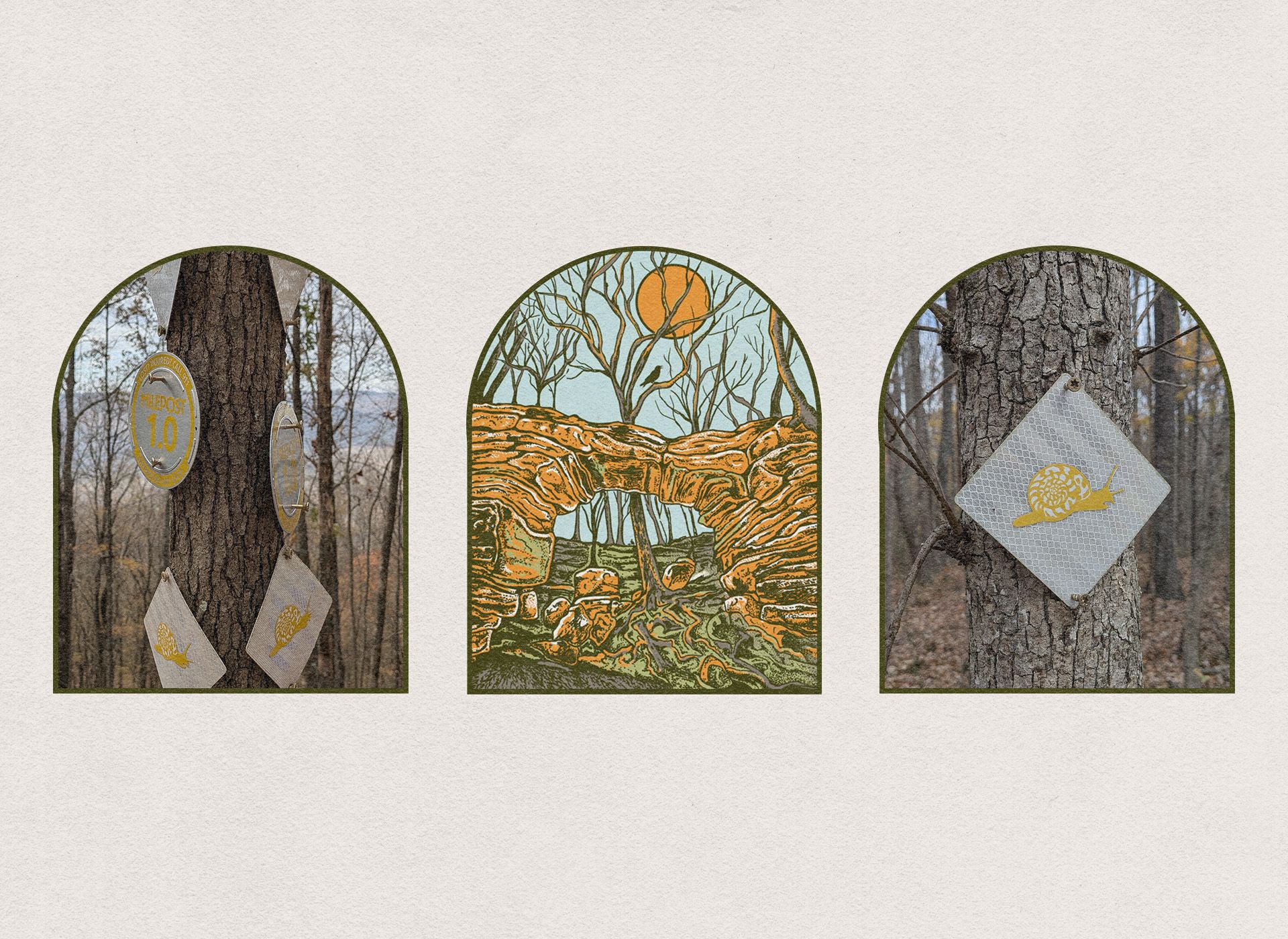
The intermittent mustard-yellow snail signs screwed into tree trunks are a reminder of what could be found here, if only one were searching the right way. Or are they markers of where the pro-limestone, anti-moss snails have been spotted? Surely not; I measure 105 feet between two of the signs. They’d be crawling all over, in that case.
Yet these snail signs taunt me: “We’ve been here,” whines a smarmy snail voice. “We’re here right now; you just can’t see us. What else are you missing?”
I could be dehydrated. Or maybe I want it too badly. Foliage falls overnight, yet it takes a patient lifetime to grow so tall.
“Half the time, I set out looking for one thing and come back talking about something completely different I noticed along the way,” said Paul Whitten, Nashville Adventures founder, of his state park hikes. He served with the Peace Corps for three years in Armenia, where his “only job [was] to show up, sit with people, and be present. Head of the Crow hits that same gear for me. … My version of meditating, if you will.”
Nature might be my altar, but I’m a fidgety congregant who snaps photos of sunsets that, upon review, are paltry. I don’t think I’m meant to be one of those birders wearing a red-flowered hummingbird feeder on my hat. Sitting still for even an hour when there are tasks to accomplish — are you serious? But that’s what it requires, if you want to lure a hummingbird.
This summer, my family of five moved in with my parents for longer than I care to talk about. They’ve rimmed their Old Hickory ranch house in bird feeders, and the two meant for hummingbirds were constant with them.
“I can’t believe it,” I kept exclaiming as the tiny hoverers fought one another for sugar water. “There are just so many of them.”
My parents, blase, aware of the beauty: “Yeah.”
The only reason I could even see the hummingbirds is that I’d slowed down long enough, having removed myself from my own home environment with its constant kids’ laundry and appliance repairs and bat house that fell down three years ago and still lies on the deck. Outside of my natural environment, I could actually see the OG natural environment.
Here, though, in the park, the snails are hidden away. Or, that’s not true: I find two abandoned shells, yet Google Lens (I couldn’t wait and searched immediately; the signal is grand up here) tells me they could be a melon snail, a shoulderband snail, or a white-lip globe. For the non-malacologists among us, my apologies, it is not easy for the layman to tell snails apart.
It isn’t easy to find one, either, and so I stop looking. The only snails I see for the remaining 1.5 miles are those on the metal signs (so many signs). The point of a state park is not to show us what we’re there to see; it’s to provide resources and conserve the land. The gall I had showing up demanding to be served. We’ve already taken so much of this land: The forests here are second-growth after we regularly logged them from the 1850s to late 1900s.
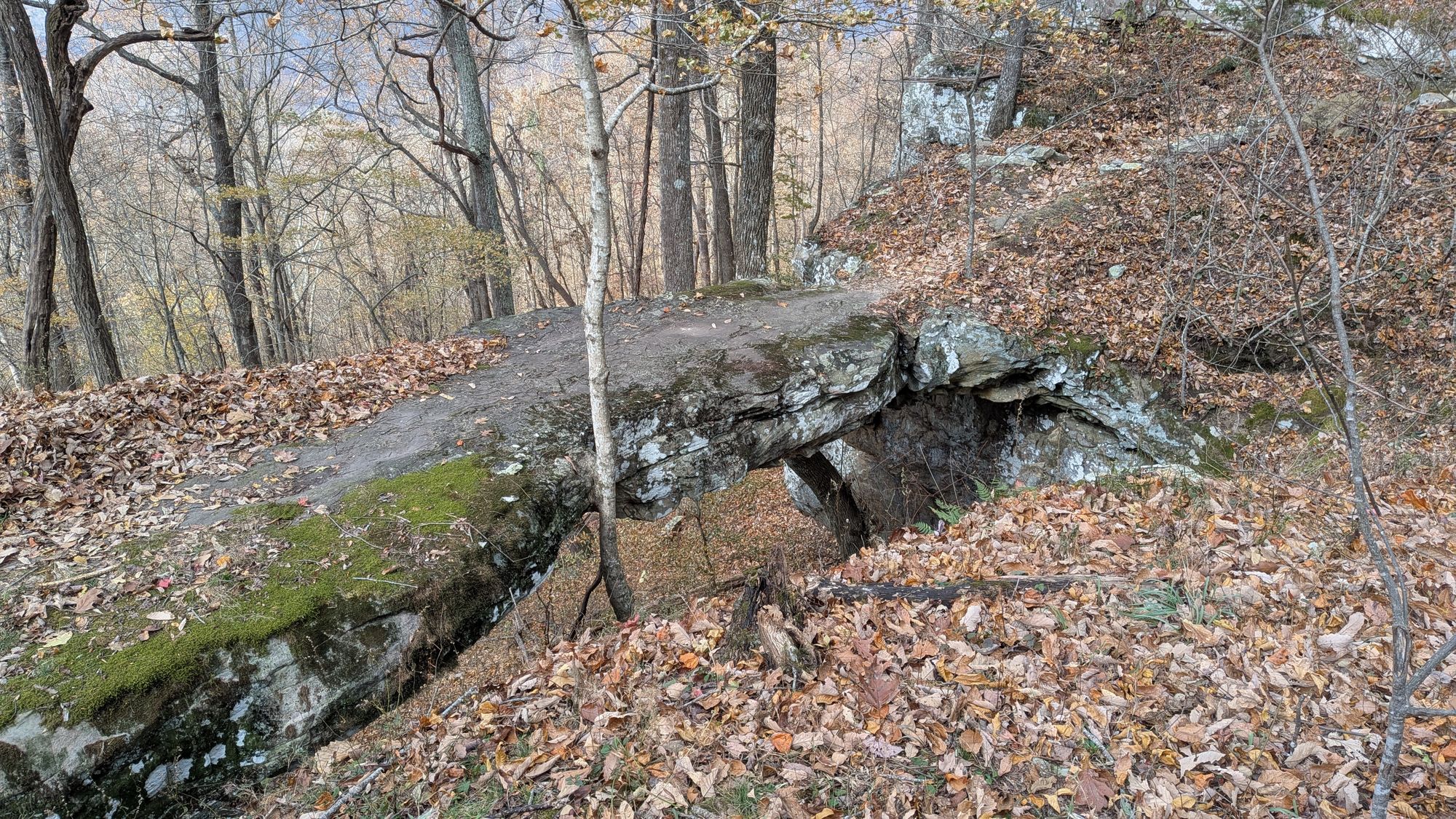
Now, instead of looking down, I’m finding other wonders. The ladybug that rides on my dog’s back. Green and brown moss tossed over a lichen-weathered limestone barrier. Some type of late-flowering boneset’s white flowers starting to crisp. Half-moon shelf fungi bracketed to tree trunks like little patios for Keebler Elves.
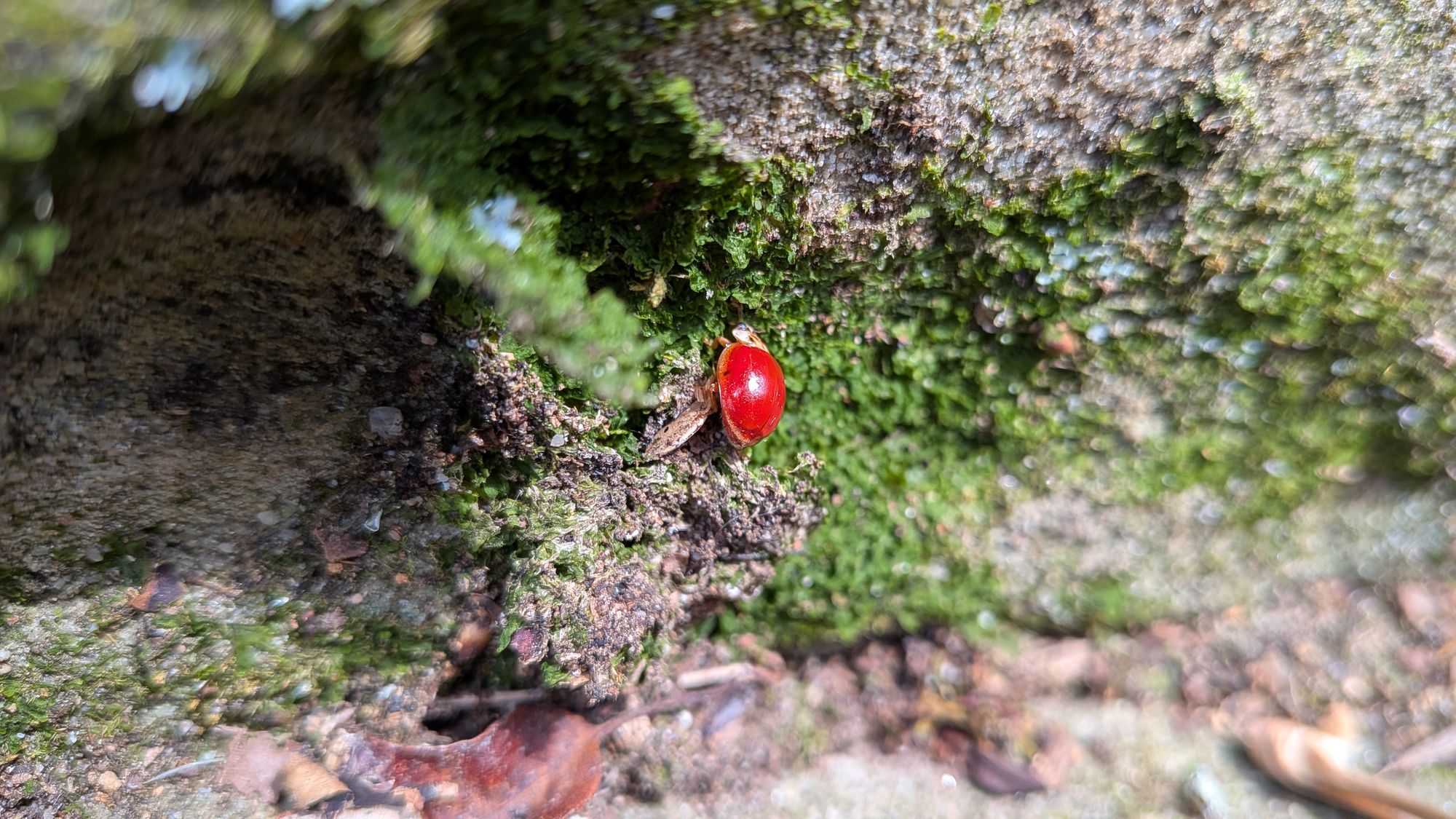
A fact that’s lost on me for a full week is that snails are associated with lethargy, and I’d spent that Saturday vigorously engaged in a game of one-sided hide-and-seek. That energy could have been better spent — no, wait. That’s the lesson, isn’t it? The energy does not need to be spent. Output does not define value.
It’s the lesson of the snail, I’ll call it. I drove an hour and a half to squint at Alabama, not uncover a fervently sought-after snail, regularly drop my phone on the hardwood forest’s floor, and recapture the right kind of energy: the positive spiritual force that, for me, is found only in the stained glass windows of autumn’s denuding trees.
If you want to find something for yourself (or find yourself), there are upcoming ranger-guided hikes.