Review: Michiko Kakutani’s The Great Wave
Books ·
As the chief critic for The New York Times Book Review from 1983-2017, Michiko Kakutani anointed a host of 20th century literary titans like Zadie Smith, Ian McEwan, and David Foster Wallace, who…
By Jerod Ra'Del Hollyfield3 min read
As the chief critic for The New York Times Book Review from 1983-2017, Michiko Kakutani anointed a host of 20th century literary titans like Zadie Smith, Ian McEwan, and David Foster Wallace, who continue to shape the book world on a global scale. Like many an Ivy-educated coastal elite, she caught a long case of Trump Derangement Syndrome that spurred her early retirement and shift to books and essays about The Donald and his demagoguery. She cut her teeth with her 2018 bestseller, The Death of Truth: Notes on Falsehood in the Age of Trump, easily the best of the embattled liberal screeds thanks to its shrewd application of postmodern theory to the MAGA world.
Yet, her new book, The Great Wave: The Era of Radical Disruption and the Rise of the Outsider, displays little of the intelligence of its more explicitly political predecessor. Gone is the writer who changed the landscape of book criticism by writing in the voice of Holden Caulfield and who could go toe-to-toe with the last of the Great American Novelists, Jonathan Franzen, on any random Sunday. All that’s left is a case of deplorable paranoia that has infected every facet of the once-great writer’s critical acumen.
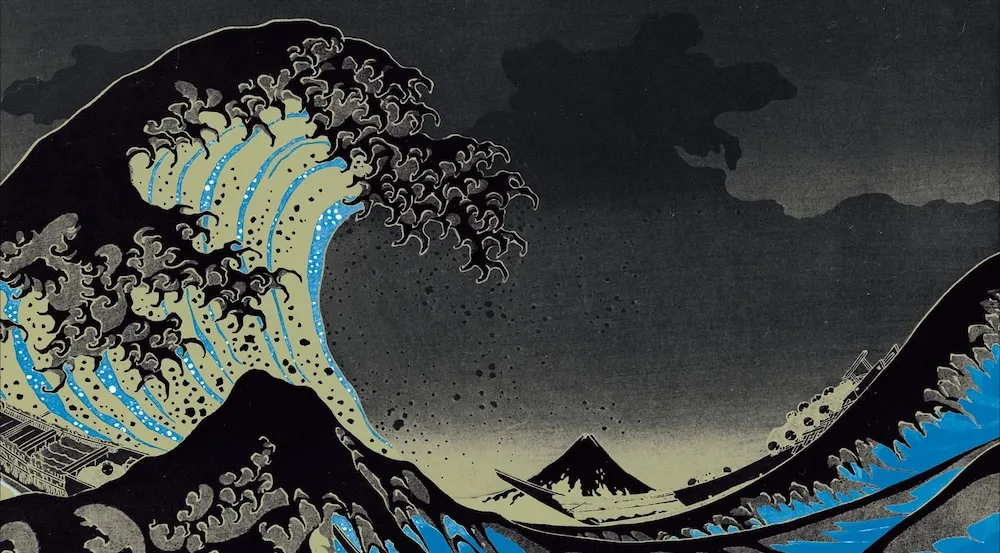
Taking its title from 19th-century Japanese artist Katsushika Hokusai’s inescapable print The Great Wave off Kanagawa, Kakutani argues that Americans have developed an aversion to the top-down systems of authority after the early 21st century's onslaught of crises. The result is that, “The democratizing effects of the internet have given outsiders of every sort—from climate activists, to white nationalists to would-be social media ‘influencers’—the ability to circumvent old-school gatekeepers.”
Given her reputation for critical astuteness, Kakutani could have written a probing book about how such trends have shifted political and cultural demographics and led to the rise of unlikely phenomenons from YouTube celebrities like Mr. Beast and Dr. Jordan Peterson to the OnlyFans girl. But despite its drive to pass itself off as a text that explores broad cultural forces, it all, of course, comes back to Trump.
Kakutani is clearly capable of writing a nuanced and sustained analysis of Trump’s lingering cultural impact, but she prefers to toss out tired bromides instead of cogent analysis. “The failure of most Republicans to repudiate Trump’s election lies and vicious demagoguery has led to the mainstreaming of hate,” is par for the course.
Rather than engage in fresh research or conversations with the fringe groups of which she writes, Kukatani just goes to her extensive bookshelves for pull quotes. She needn’t talk to any of the public intellectuals who make up the New Right because she read James Pogue’s masterful 2022 Vanity Fair piece on it like the rest of us. Only we don’t have the same clout to instantly garner a book deal from Crown.
What results is a very public instance of a writer so ensconced in her bubble that she doesn’t realize her argument caves in on itself. The insults of “casual nihilism” and “omnipresent irony” that she lobs at the New Right endows it with a luster far shinier than the bland lefty monoculture that spawned the new Politics of Joy. Her contention that Righty grassroots movements in places like Loudoun County, VA, and Franklin, TN, were pure astroturf overlooks both the reality of de facto antiestablishment organizers like Ian Prior and Gary Humble and the resoundingly corporate funding of movements such as Occupy Wall Street and BLM that she returns to as paragons of spontaneous change.
The Great Wave reveals more about the political platitudes that continue to drive the publishing industry than a cogent assessment of horizontal power structures. Despite Kakutani’s overreliance on the word “foment” to get her point across, it’s clear that the rebellion is an illusion. Those rarified legacy media figures of the Kakutani kind are so firmly entrenched in their lofty cultural positions they don’t even have to try. That’s the world we continue to live in. At least for now.
The rest of the story
Keep reading: free, just your email
You keep coming back. It's free; we only ask for your email.
The rest is one step away, and the Daily comes with it every weekday afternoon.
Like what we do? Forward us to a friend.
Comments
Bards join the discussion. Everyone can read it.