Anti-Nostalgia in the Millennial South
Molly Silver left Los Angeles after the pandemic. In her debut novel, the native Tennessean returns to her roots and offers a rarely-seen portrait of the South.
Like thousands of Californians over the last decade, Molly Silver moved to the Greater Metro Nashville Area between the last gasps of COVID and the first rumblings of the Palisades Fire. But, in contrast to those other American refugees from SoCal who keep locals in a perpetual tizzy, she’s born and bred in the Volunteer State and very much enjoying her homecoming.
Silver spent nearly two decades in L.A.’s entertainment and hospitality industries. An actor and filmmaker, she appeared in numerous projects from commercials to web series as she worked her way up to union memberships. When the 2023 strikes forced her to take a break from writing, she tried something new: she began a novel.
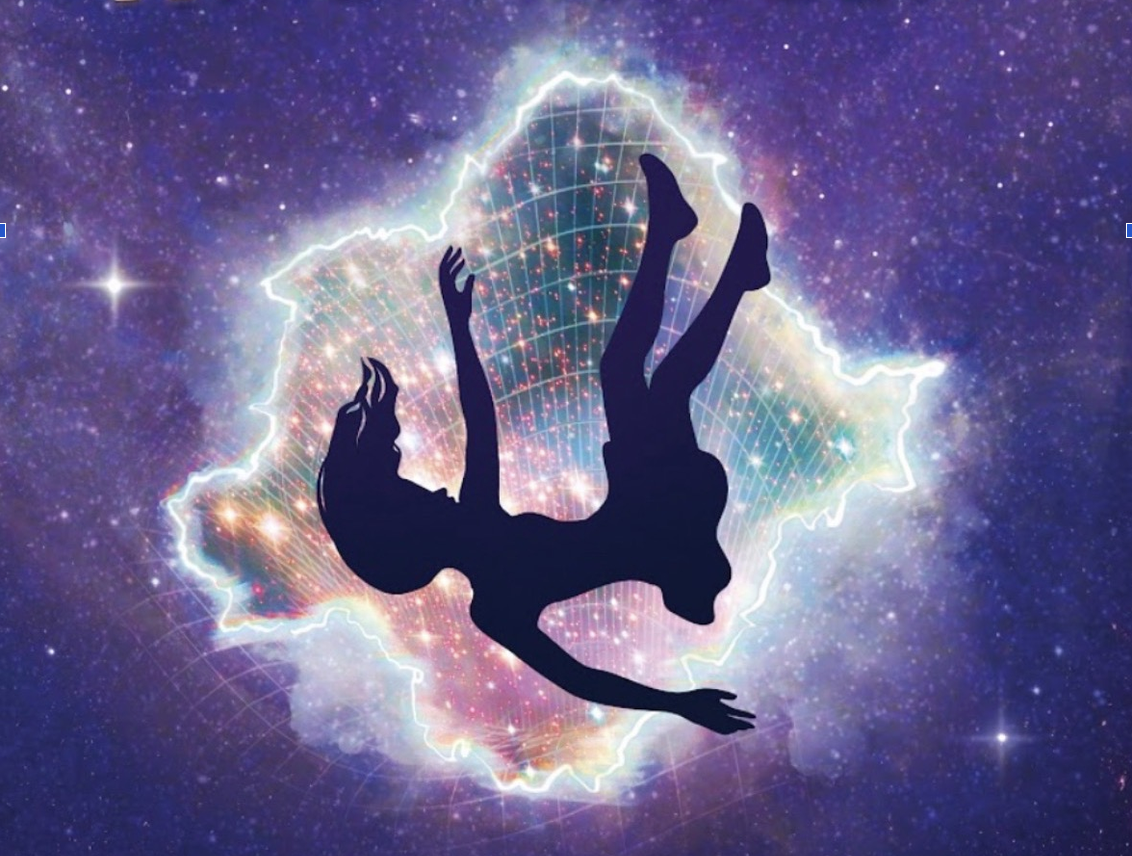
In May, Silver’s debut OMG! Did I Just Time Travel?! hit bookstores. Focusing on deadly serious teenage athlete, Lydia James and her sudden descent into 1989 thanks to a portal in the woods next to her Knoxville high school, the novel melds sci-fi and Y.A. without the melodramatic excess or revelry in nostalgia that have marked both genres over the past few years. More impressively, Silver manages to create a real-deal portrait of the contemporary South negotiating its own identity that remains free from the down-home tropes that continue to define the region.
As she prepares to embark on the fall book singing circuit, Silver spoke with The Pamphleteer about preserving Nashville’s creative community, interrogating millennial nostalgia, and capturing a version of the South that locals can appreciate.
This interview has been edited for length and clarity.
The Pamphleteer: This is a very Southern book. What I find refreshing about it is that it doesn’t go the way of Faulkner or Flannery O’Connor or jump into the Southern Gothic’s excesses and stereotypes. It could only take place in Knoxville with its milieu of the Oak Ridge Oppenheimer lab and football town. It’s a very distinct South, and you really get the geography of our region. What was your approach to the world-building?
Silver: How the world building started was interesting…not to start off on a macabre, sad note, but I lost my mother in 2020. Two weeks before the global shutdown, she unfortunately passed away. And then during my time of grief, I really was just becoming so nostalgic for when she was at her happiest and remembering her in a certain way. I just kept being pulled back to these certain time periods in Knoxville during the 80s and the 90s. I wanted to keep that nostalgia alive, and I wanted to capture that time of Knoxville as accurately as I could and that was me really pulling from my past to make that happen.
The Pamphleteer: When I found out about the book, I expected it to tap into our current “I love the 80s, 90s, Bush 2000s vibe” that’s been all over social media this year. But it was unexpected that you focused on Gen X and Gen Z while sidelining the millennials. It’s a very melancholic type of nostalgia that brings up a lot of caveats. Why do you think people are especially drawn to those decades now, and why do you think that our particular generation is so obsessed with the past?
Silver: The reason why we are so nostalgic is because even though we are connected more than ever through all of our technological devices and social media, we are lonelier than we have ever been before. We don’t remember true human connection.
We have everything at our fingertips twenty four seven. We’re like Pavlov’s dog, unfortunately, with our technology. Anytime we hear a ding, a buzz, a whistle, we’re picking up our phones, and we’re so pulled out of being in the moment and being present. In the 80s and 90s, what was great is we still had technology, but it was moving at a sloth's pace. So, we were just so hyper present. Our media content was long-form. We’re not having these trends and algorithms that are truncating our ability to be present and our attention spans. Back then, time moved slower. Everyone had demands on them, but it’s not the way that it is today, where everything can be so streamlined, and we have all these expectations put on us because of that.
I don’t want to speak for everyone, but I think everyone is struggling on some level while asking, “Why do I feel so lonely?” or “Why do I feel so disconnected when we are so connected and through so many ways?”
The point of the book wasn’t, “Put your phones away,” and, "Technology is terrible.” It’s a way to look to the past and see what maybe we got a little right and if there is a way that it’s more applicable in our everyday life. I think that’s why we were truly more nostalgic than ever, because we want that, but we don’t know how to get back there.
The Pamphleteer: One of the best moves that you make in the book is that Lydia can mine every subculture imaginable with her phone, but it’s Kelly Stein who really knows who she is despite having much less access to culture that exists beyond the mall and smaller stores in 80s Knoxville. How did you use the time period to craft the characters’ identities?
Silver: Lydia does feel lost. You can hear it on the first page when she is griping about school, and “Where do I fit?” You couldn’t pay me enough money to be a teenage girl today. I know the struggles I had as a teenage girl with music videos and magazines and not feeling like enough. I couldn’t even imagine that feeling with social media and all the things that are crammed down their throats. It’s hard to know who you really are when you’re trying to be all these other things. The 80s were a different time. There was space to organically figure out who you were or what made you tick without a lot of external pressure from technology and social media. You still had magazines and TV, but it wasn’t in your face every waking moment of the day.
The Pamphleteer: The book has a very unique structure. In the first third, what we see happens in real time. Then, you shift to the letters Kelly writes Lydia. It’s a time capsule before everything comes crashing down in that third act. What led you to organizing the book in this way?
Silver: We’re seeing the whole story through Lydia’s eyes. But I love the epistolary chunk of it, because it’s that moment of the book that you get to fall in love with Kelly. It’s like a big sister writing her younger sister, and telling her about all these beautiful moments in life and trying to give her wisdom.
There’s just something really sweet about it because you start to see Kelly’s voice mature. You see her writing getting better. You see her music tastes change over time. You see her grow up. You see her come into her own. My goal was for it to feel like you’re sharing that moment with Lydia. You’re like, “Oh yeah. I get exactly what she’s feeling in this moment, because I’m feeling it too.” In a way that part of the book is time-traveling to the past too, but through Kelly’s lens.
The Pamphleteer: When the story gets back to the 80s, junk food is ingrained in the daily lives of all these characters. Looking back, I’m almost embarrassed by how accurate of a diet assessment that was for our generation. Commentary or historical accuracy?
Silver: Back then as kids, we had no idea if our food was good or bad. I think if our parents knew what we were consuming, it would have been a little different. But at the same time, even the ultra-processed food was not nearly as bad when we were kids. It’s definitely become worse over time. The whole takeaway of the book is balance. Not just your food, but your technology. All of it. I wanted to find a fun way to not force a message down people’s throats, but the sensory aspects of food really help paint a more nostalgic picture of what it was like to be in that time period.
The Pamphleteer: How has moving from Los Angeles back to Tennessee influenced your storytelling? You’re not coming at this world from an outsider’s perspective. How did your time in L.A. impact you and how did writing the project in Nashville affect the final draft?
Silver: The beautiful thing about Tennessee that I realized after coming back here is how life moves. My nervous system got really used to Los Angeles when it’s probably not built for that. I like that I can get real quiet here. Even though Nashville is a city, there is still a stillness here. That gave me the ability to shut everything out and be able to really focus on this story.
But once the OMG first draft was done, I had to go back to work. And through my day job, so much happened for me. It was such a reminder of the care that people have for their community. All the magic that I had hoped, wished, and dreamed would happen in L.A. for me, happened in Nashville…organically. It’s because of the community.
The guests at my job kept asking questions about my creative career, how it was going, and checking in with me regularly. One such guest invited me to a book event where I met her friend, Leslie Liaudtuad, a fellow author who then so graciously introduced me to her publishers. Six weeks after that event, I had a contract in place with the same publishers. It’s crazy how that all happened, because of the community in Nashville, and the epicenter being the sweet restaurant where I work called the Roze Pony. I am deeply aware of what a rare gift this kind of support is. This amazing community is something I will never stop appreciating.
The Pamphleteer: Preserving community has been paramount for a lot of people, especially exiles from California. Do you think Nashville is turning into Los Angeles?
Silver: Yeah, no. Nashville is such a sweet place. A lot of former Angelinos are really impressed because of the level of community here. People want to know you. People want to care about you. People genuinely care about their neighbors. It's not that it didn’t happen in Los Angeles. It’s just different there. Everything is going so fast. People are so laser focused that the little things get lost in the rat race of every day life. Nashville is filled with so much Southern charm—with manners, with care—the stuff that makes this part of the South so great. And personally I don’t think Nashville would ever turn into Los Angeles…even if we do get an Erewhon.
I was away from the manners and Southern charm on a daily basis for so long that I forgot what power it holds . What is great about Nashville is that artists support other artists. They know how hard it is, and that you have to work a lot of odd jobs while you go after your craft. And that same community celebrates the small wins together.
In Knoxville, you have the charm. In L.A. you share work environments with some of the funniest, most talented people in the world that keep you inspired and motivated as an artist. Nashville is the perfect, beautiful amalgamation of those two things. And to me, that is what makes this place so damn special.
OMG! Did I Just Time Travel?! is available wherever books are sold.