
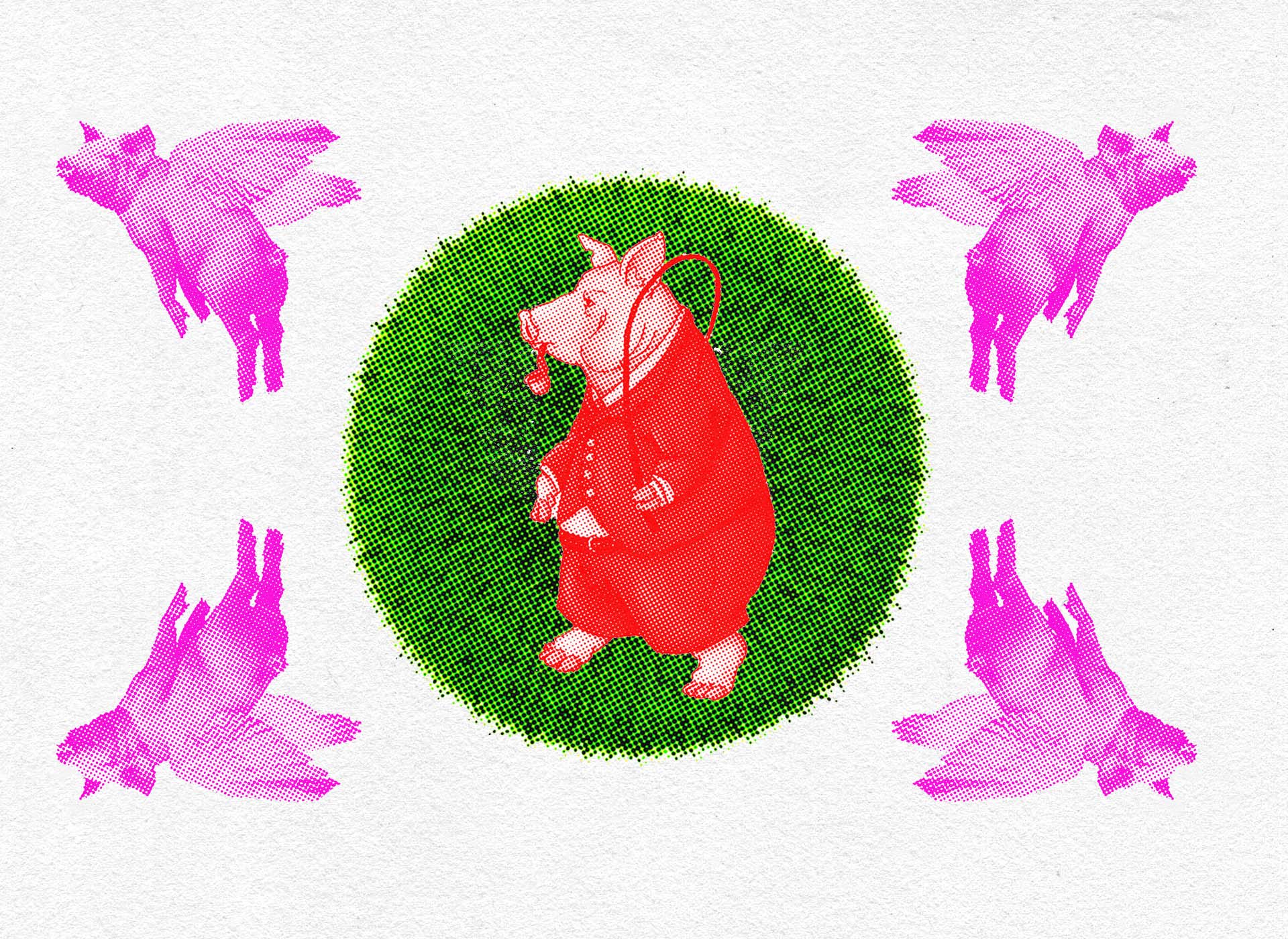
Everything But The Squeal
Hog Lore & Tennessee Heritage
Beyond the boot-wearing, Broadway-stomping bachelorettes and guitar-picking songwriters defined Nashville, the city’s heritage found itself anchored in something often overlooked, but not yet forgotten.
They’re in your breakfast, your BBQ, and quite possibly your barn. They’re short, fat, and kind of hairy, and from the very beginning, Tennessee’s culture has been inseparably tied to them. I’m talking about hogs!
Nashville hog lore goes way back to the pre-Cumberland Gap pioneers of North Carolina and Appalachia. Heroes like James Robertson, the founder of Nashville, drove their herds across the Appalachian Mountains in search of opportunity and new land to settle.
A quick visit to Fort Nashborough, Nashville’s first settlement, gives us an idea of what those early days would’ve looked like. “In October 1779, Robertson set out once more with a party of 12 to 15 frontiersmen seeking to establish a permanent settlement at the springs. Driving sheep, cattle and hogs, they rode horseback through the Cumberland Gap,” reads a plaque located at the site.
As time passed, hogs proved a stable and reliable way for Tennesseans to nourish themselves and sustain their families. Our seventh President Andrew Jackson, whose plantation home sits outside of Nashville, consumed a diet heavier in pork than any other meat (this would’ve been a standard Tennessean diet at the time).
So, is there a correlation between eating a lot of pork and warring against the Fed? Possibly. Still more research to be done in this field…
As Tennessee developed from the late 19th and into the 20th century, hogs remained an important part of the societal infrastructure and the smell of BBQ is still the primary pheromone of Broadway. Beyond the utility of the animal, hogs represent something deeper:, a symbol of cultural homogeneity, resourcefulness, and meaningful work.
So, why hogs anyway? Well, for a lot of reasons. For one, the forested landscape of Tennessee provided an ideal setting for raising them. Forest ground scattered with nuts and acorns means that they can just feed themselves, and raising them requires very few resources. Where plains favor cattle, forests favor hogs.
Hogs reproduce quickly with multiple litters each year. Their 4-month gestation period means you can raise them a lot faster than you can cattle, which have a 9-month gestation period. You can be poor and raise a lot of food on the cheap by going with hogs.
It’s famously said that you can “eat everything on a pig but the squeal.” The animal itself is extremely versatile and offers nearly a hundred different products for human use (foods, leathers, oils, soaps, ointments, etc.). In a time when you’re living on the frontier of civilization, facing the elements in a brutal fight for existence, you can’t let anything go to waste.
Modernity offers us all the luxuries of human genius without any of the work. We don’t have to chop wood, but we can stay warm all winter long. We don’t have to know carpentry, but we can always find a roof over our heads. And we don’t have to raise hogs, but we can have bacon every morning with our pancakes.
Has this disconnect from labor and reward retarded us beyond repair? Maybe for some, but for readers who still have passions burning in their hearts for heritage and soil, opportunity abounds. The human story is not lost on us; we are not all robots and can still touch grass and love the land.
For those of you who find Tennessee hog lore exciting, visit a farm or learn how to butcher a hog yourself. At the end of February, our men’s group, Meriwether Academy, is going down to a farm in Dickson, Tennessee, where we’ll spend an entire weekend learning how to slaughter, butcher, process, and pack a hog together. We have spots left.
If you’re interested in learning more about that you can read about the retreat here.