
Farming, Philosophy, and Fraternity
An American cultural renaissance emerging in Nashville
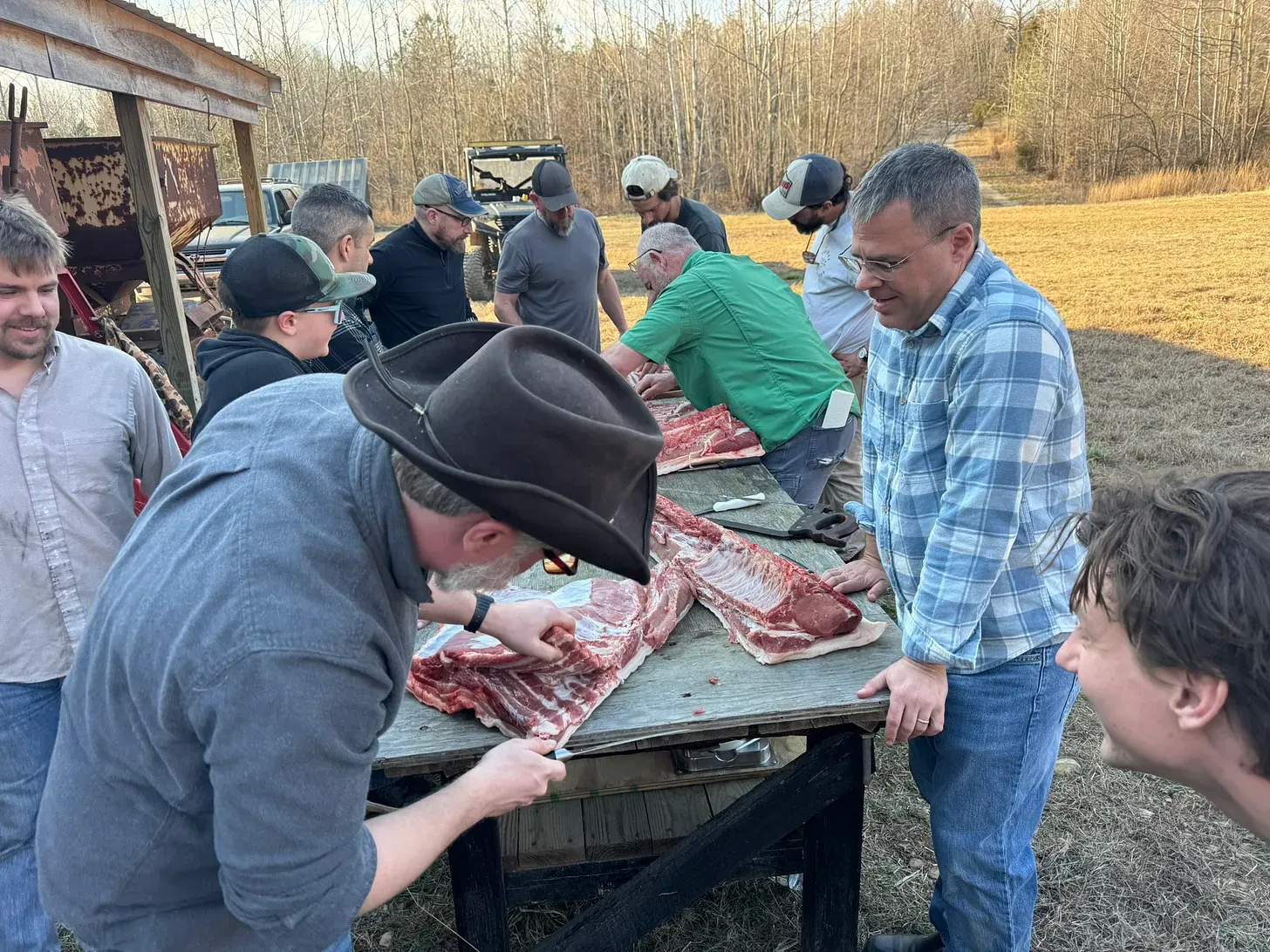
It was an interesting week. I learned how to slaughter a hog at a farm in Dickson. I attended a Jeffersonian-style symposium dinner featuring the Chair of Belmont’s philosophy department. And I woke up early one morning to discuss the life of Poplicola, an ancient Roman aristocrat, with a small group of men in a West Nashville coffee shop.
These three events were eclectic but not random. They were all hosted by the Meriwether Academy, a new Nashville-based men’s group dedicated to reviving the ideal of the American man. How can we become better men today? How can we improve ourselves, our families, our communities, and, ultimately, our nation? What can we learn from the great men of our ancient and American past—such as the group’s namesake, Meriwether Lewis, famed explorer of the American frontier—to guide us on our journeys?
These are the questions that guide Meriwether Academy and many of the men like me who have come to its events. I met Warren Steury, twenty-eight year old founder of the organization, last year at a Pamphleteer event, which, inspired by recent successes in Oakland, advocated "robust civic engagement from ordinary citizens" in Nashville politics.
At this time, Meriwether was just getting started. I was inspired by Steury's vision, which, beyond hosting men’s events, includes founding a school for boys dedicated to classical and outdoor education—something like a cross between Plato’s Academy and the Boy Scouts, as he puts it.
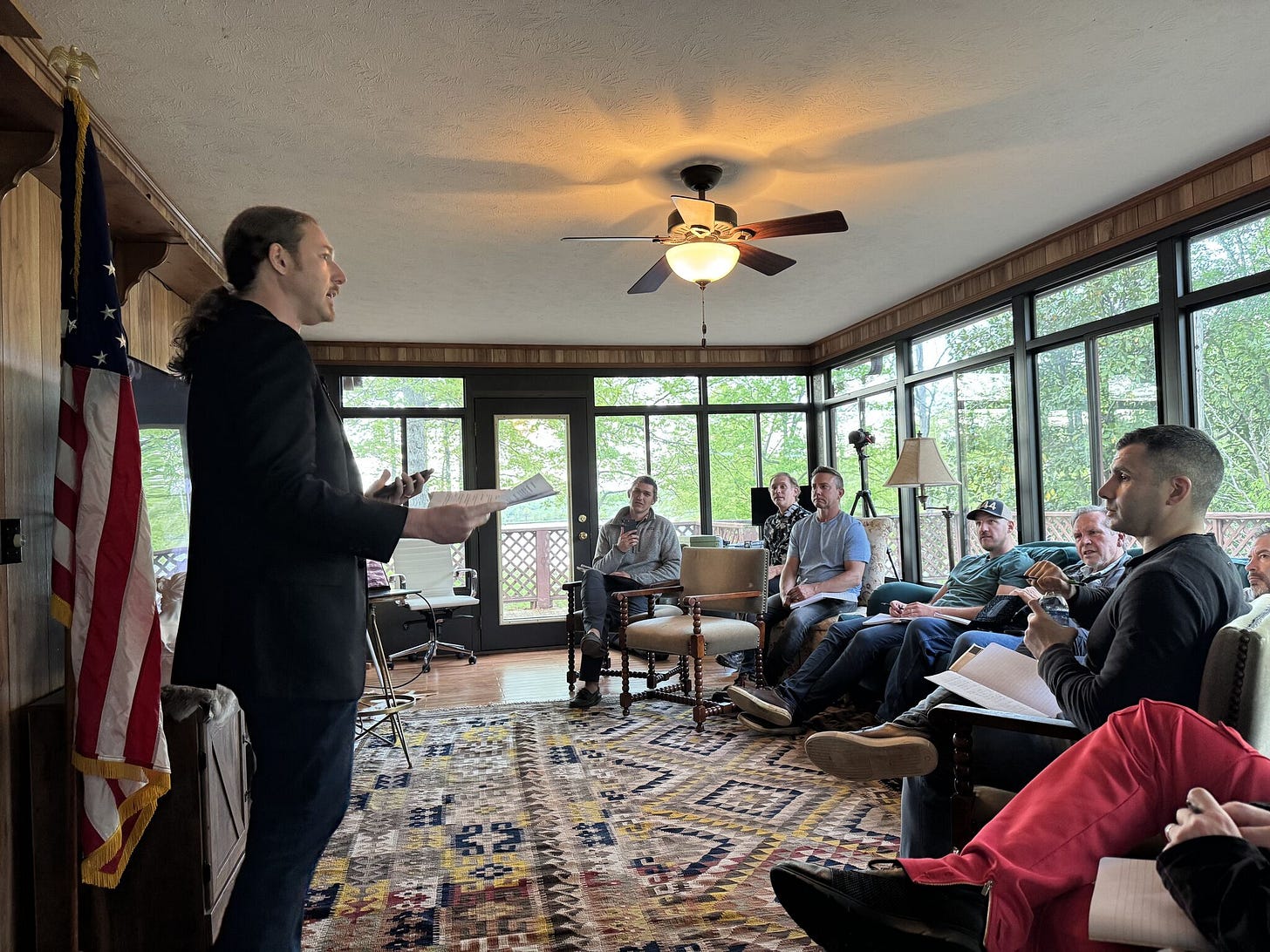
I’ve been regularly attending Meriwether events over the past year. I’ve been impressed with their variety and quality, and with how the group has grown over this short time. The three events that I attended this week are representative of the three types of events that the group hosts.
First, quarterly outdoor retreats, where about a dozen men gather in a countryside home for a weekend. Each retreat has a theme. Some are focused on developing outdoor skills, such as the past weekend’s hog slaughtering, at which we also discussed the alienation of modern American man from nature and the importance of honoring the lives of the animals that we eat.
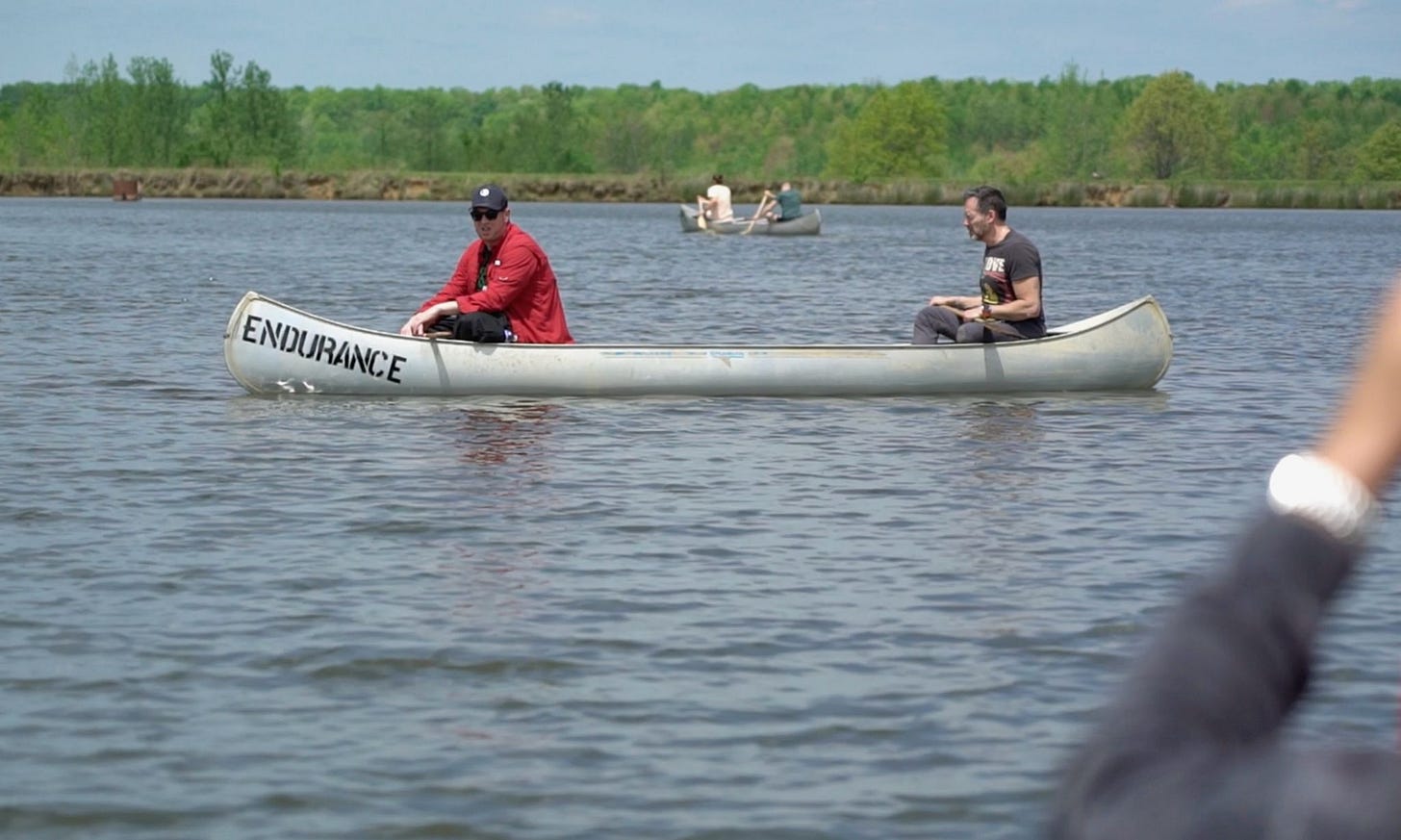
Other retreats are structured more like small conferences, featuring long talks interwoven with recreational outdoor activities, like canoeing. Some talks discuss the lives of great men from American history, including Founding Fathers, Civil War generals, American Transcendentalists, and Meriwether Lewis, whom we discussed while visiting his Burial Monument in Hohenwald. Other talks feature men giving practical advice, often sharing adversities that they’ve faced, such as struggling to control their desires or failing as fathers, and how they overcame them.
Food and dining are central elements of the retreats. Each retreat serves delicious farm fresh food, most sourced locally from Fairfax Farms in Dickson. For breakfast we eat sausage and eggs; for dinner, pork chops or steak. The dinners follow a format that Thomas Jefferson used at his dinner parties. There is one rule: only one person talks at a time. When someone is talking, he has everybody’s attention. One designated person guides the discussion by posing questions to the group like, “What does it mean to be an American today?” Jefferson found, as have we, that this format allows the group to have one unified, high quality, intellectually stimulating conversation. This, in contrast to the banter of small groups that characterizes typical dinner conversations.
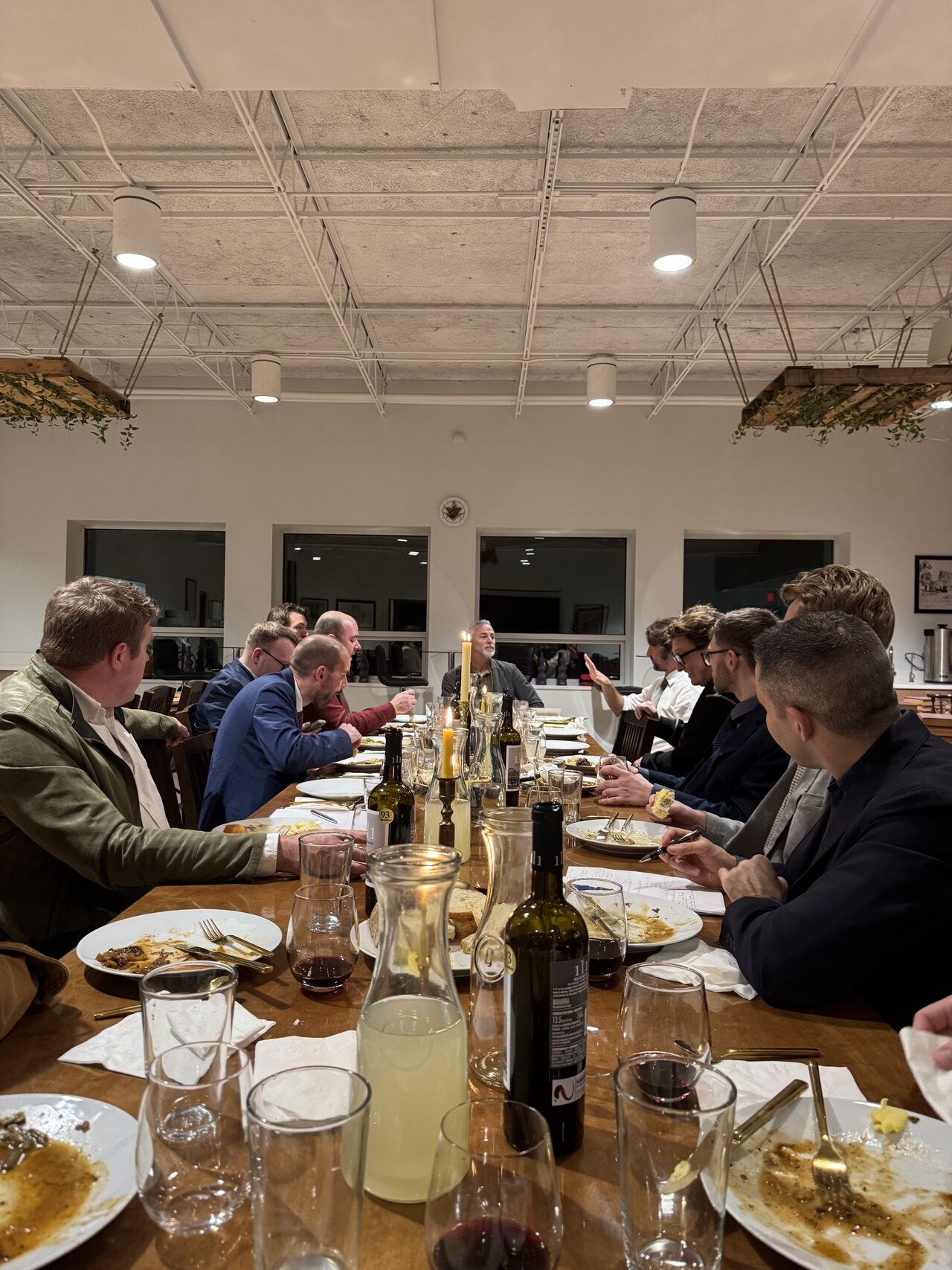
In addition to outdoor retreats, Meriwether hosts monthly philosophy dinner symposiums in the city, each following this Jeffersonian format. This week’s guest was Belmont professor Mark Anderson. Western philosophy has been driven, he explained, by the battle between two philosophical concepts: being (represented by Plato) and becoming (represented by Nietzsche). We spent nearly three hours asking him questions and discussing the practical implications of this philosophical debate. In particular, how the suppression of being today partially explains the ills of modern society.
Last year, Meriwether hosted Michael Millerman, founder of the online Millerman School, for several symposiums. Millerman discussed Leo Strauss’ What is Political Philosophy?, helping us understand ancient and modern political philosophy, and Allan Bloom’s Closing of the American Mind, helping us understand the virtues of classical education and what has gone wrong today.
Finally, Meriwether’s weekly study club discussions each gather half a dozen men in a coffee shop to discuss an assigned reading. Last year, the group sampled a variety of texts, including the inaugural addresses of Teddy Roosevelt, George Washington, and other American presidents; Pericles’ funeral oration; the Declaration of Independence, which we were challenged to memorize; Emerson’s “Self Reliance”; and, my favorite, Thoreau’s beautiful and insightful essay “Walking.”
This year, the group has undertaken a more directed study, electing to read all forty-six chapters of Plutarch’s Lives. Each week focuses on a single chapter, which tells the story of a great man from Greek or Roman antiquity, such as this week’s reading on Poplicola. Alex Petkas, expert classicist and Cost of Glory founder, is slated to speak at a symposium dinner on Plutarch next month.

A cultural-intellectual renaissance is beginning in America. It is happening offline. It is happening outside of New York, Washington D.C., and Silicon Valley. It is happening outside of mainstream academic and political institutions. It is happening in Nashville and other small cities throughout the American heartland. It is happening through grassroots efforts like Meriwether, pioneering a cultural vision, and The Pamphleteer, networking local activists to advance cultural and political projects.
Over the past few years, I’ve traveled the country connecting with dozens of similar groups. I’ve reported in-depth on some of them on my Substack. These articles, and others planned throughout this year, may form the basis for a book that will map out this emerging, decentralized movement: What unites the groups? What differentiates them? What long-term impact might the movement have?
The groups are united around a broad vision surrounding education, modernity, and culture. Most champion classical, human-centered, education; reconnecting with nature and building local community, away from the digital world; and cultivating a deeper, more authentic American patriotism. But each group is genuinely unique.
Each is animated by a specific concern, as Meriwether is with educating young American men. Each is articulating their concern and experimenting with small scale solutions. And most are grounded in a different physical place. The collection of groups, I believe, has the potential to grow into a powerful force. I envision a future with groups in hundreds of cities across America, each expert in a specific issue, each modeling solutions for larger-scale changes, and each helping to build a national activist network capable of implementing them.
If this vision speaks to you, get involved. We need to grow each group. If you are in Nashville, join Meriwether. Come to a study club meeting, a symposium dinner, or an outdoor retreat. We need more groups throughout the country. If there are none in your area, start one. Organize it around your most pressing concerns. Ground it in your city’s unique history or state’s natural beauty. Look to Meriwether and Nashville as examples. We need to network the groups. Reach out to other groups. Share your insights and best practices. Collaborate on events, connect your members, and make plans for larger projects. We need skilled allies to help implement them. Connect with local entrepreneurs, businessmen, farmers, politicians, professors, and internet-based scholars and activists aligned with the vision. If you have other ideas, reach out to me, and let’s discuss.
Something big is happening in America. And it’s coming from an unlikely source. As one of the readers of this article’s draft put it: “They’re cutting up pigs in Nashville. But it’s a sign that a new day may be dawning in America.”